Type to search. Use arrow keys to navigate results. Press enter to view all results.
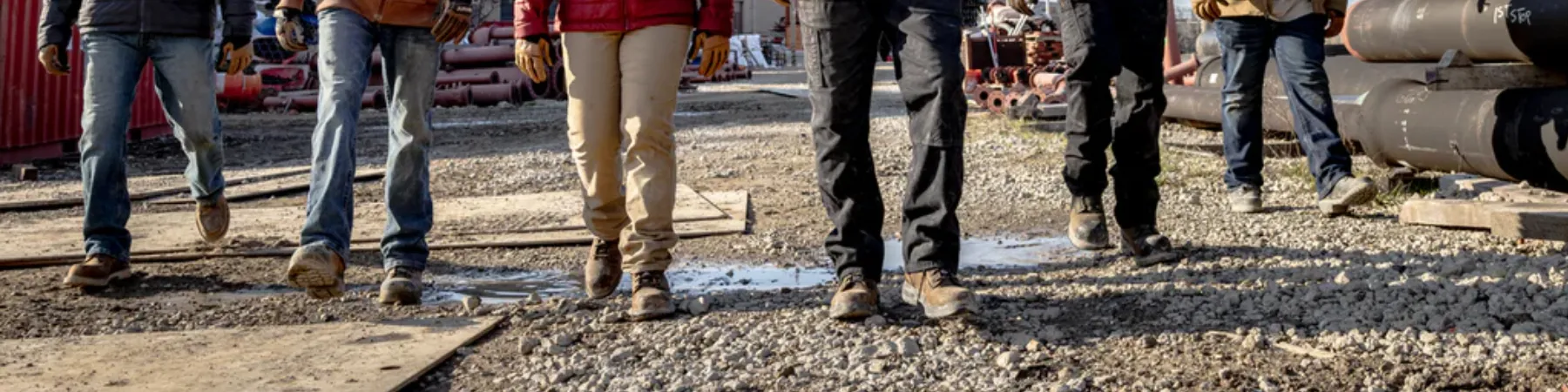
Work boots are built to protect your feet on the job, with reinforced construction, durable materials, and safety features designed for everything from construction sites to industrial facilities. The right pair depends on your trade, the hazards you face, and the regulations your workplace requires. Below is a breakdown of the most common boot styles, safety ratings, and toe protection options, so you can match the boot to the work.
Insulated Work Boots Insulated work boots add warmth for cold-weather job sites, with built-in insulation that keeps your feet comfortable in freezing temperatures without sacrificing the protection of a standard work boot. Insulation is typically measured in grams, with lighter weights (around 200g) suited for cool conditions and active work, mid-range insulation (400g to 600g) for cold weather and moderate activity, and heavier insulation (800g to 1,000g or more) for extreme cold and low-activity work like standing watch or operating equipment. They're a standard choice for construction workers, utility crews, oil and gas workers, and anyone working outdoors through the winter.
Logger Boots Logger boots are heavy-duty work boots originally designed for the logging industry, with tall shafts, aggressive lugged outsoles, and raised heels that grip uneven terrain and dig into soft ground. They typically feature thick leather uppers, sturdy lace-up closures, and reinforced ankle support for working on slopes, in brush, or on rough job sites. They're popular with loggers, linemen, foresters, and anyone working in rugged outdoor conditions.
Slip-On Work Boots Slip-on work boots offer the protection of a traditional work boot with the convenience of no laces, making them quick to get on and off throughout the day. They typically feature pull tabs, elastic gore panels, or wide openings for easy entry, along with the same durable construction and safety features as their lace-up counterparts. They're a favorite for farm work, ranch work, and trades where workers move in and out of buildings often.
Rubber Work Boots Rubber work boots are fully waterproof boots built for wet, muddy, and chemical-heavy environments, with seamless rubber construction that keeps moisture out completely. They're commonly used in agriculture, food processing, construction, and any job where you're standing in water, mud, or harsh substances. Many feature insulated linings for cold-weather work and reinforced toes for added protection.
Low-Cut Work Boots Low-cut work boots, sometimes called work shoes or oxfords, sit at or just below the ankle for greater mobility and a lighter feel than traditional work boots. They still offer key safety features like protective toes and slip-resistant outsoles, but in a more flexible silhouette. They're a good fit for warehouse work, light industrial settings, and trades that don't require full ankle support.
High-Cut Work Boots High-cut work boots extend well above the ankle, often six to eight inches or higher, providing maximum ankle support and protection against debris, sparks, and rolling hazards. The taller shaft helps stabilize the foot on uneven surfaces and shields the lower leg from common job site dangers. They're the standard choice for construction, heavy industrial work, and any trade where ankle support and coverage matter.
EH Rated Work Boots EH (Electrical Hazard) rated work boots are built to provide a secondary layer of protection against electrical shock from contact with live circuits. They feature non-conductive soles and heels designed to resist electrical current in dry conditions, helping reduce the risk of injury if a worker accidentally contacts a live wire. They're commonly required for electricians, utility workers, and anyone working near energized equipment.
ESD Rated Work Boots ESD (Electrostatic Dissipative) rated work boots are designed to safely channel static electricity away from the body and into the ground, preventing static buildup that could damage sensitive electronics or ignite flammable materials. Unlike EH boots, which insulate against electrical current, ESD boots are conductive in a controlled way to dissipate static safely. They're commonly required in electronics manufacturing, clean rooms, and facilities handling flammable chemicals.
Met Guard Work Boots Met guard (metatarsal guard) work boots include extra protection over the top of the foot, shielding the metatarsal bones from impact and compression injuries caused by falling or rolling objects. The guard sits above the toe cap and extends back across the laces, often built into the boot or available as an external add-on. They're commonly required in welding, foundry work, heavy manufacturing, and trades involving heavy materials.
Fire Resistant Work Boots Fire resistant work boots are constructed with flame-resistant materials and heat-resistant outsoles that won't melt or ignite when exposed to sparks, heat, or open flame. They typically feature leather uppers, heat-resistant stitching, and outsoles rated to withstand high temperatures. They're a standard requirement for welders, foundry workers, firefighters, and trades involving hot surfaces or molten materials.
Steel Toe Steel toe work boots use a steel cap inside the toe box to protect against impact and compression injuries from heavy objects. Steel offers strong, time-tested protection at a lower price point, but it conducts both heat and cold, making it less comfortable in extreme temperatures. It's also heavier than newer materials and will set off metal detectors, which matters in some workplaces.
Composite Toe Composite toe work boots use non-metallic materials like Kevlar, plastic, or fiberglass to protect against impact and compression. They're lighter than steel, don't conduct heat or cold, and won't trigger metal detectors, making them a versatile choice across many industries. Composite toes typically meet the same safety standards as steel toes while keeping the boot more comfortable in extreme temperatures.
Soft Toe Soft toe work boots have no reinforced safety cap, making them a lightweight, flexible option for jobs that don't require impact protection. They still offer the durability, support, and slip resistance of a work boot, just without the added safety toe. They're a good fit for trades like landscaping, light construction, ranch work, and any job where comfort and mobility matter more than toe protection.
Aluminum Toe Aluminum toe work boots offer the same impact protection as steel but at roughly half the weight, making them a popular choice for workers who want lighter boots without sacrificing safety. Aluminum still conducts temperature and triggers metal detectors, but the weight savings makes a noticeable difference over long shifts. They typically meet the same safety standards as steel toe boots.
Carbon Toe Carbon toe work boots use carbon fiber composite caps that are extremely lightweight, non-metallic, and don't conduct heat or cold. They're often the lightest safety toe option available, making them a favorite for workers who prioritize comfort and reduced fatigue. Like other non-metallic toes, they won't set off metal detectors, which is useful in airports, government facilities, and security-sensitive workplaces.
Alloy Toe Alloy toe work boots use lightweight metal alloys, often a blend of aluminum and titanium, to deliver steel-level protection at a significantly lower weight. The toe box is also typically thinner than steel, giving the boot a sleeker silhouette and more room inside for your toes. They do conduct temperature and trigger metal detectors, but the comfort and weight benefits make them a popular upgrade over traditional steel.
Work Western Boots Work western boots combine the classic cowboy boot silhouette with the durability and protection needed for hard labor on ranches, farms, oil fields, and job sites. They typically feature sturdy full-grain leather uppers, slip-resistant outsoles, reinforced shanks for support on uneven ground, and the iconic angled heel that hooks securely into a stirrup. Many also come with safety features like steel, composite, or alloy toes, electrical hazard ratings, and waterproof linings, making them a popular choice for ranchers, oilfield workers, and tradespeople who want western style with on-the-job protection.