Type to search. Use arrow keys to navigate results. Press enter to view all results.
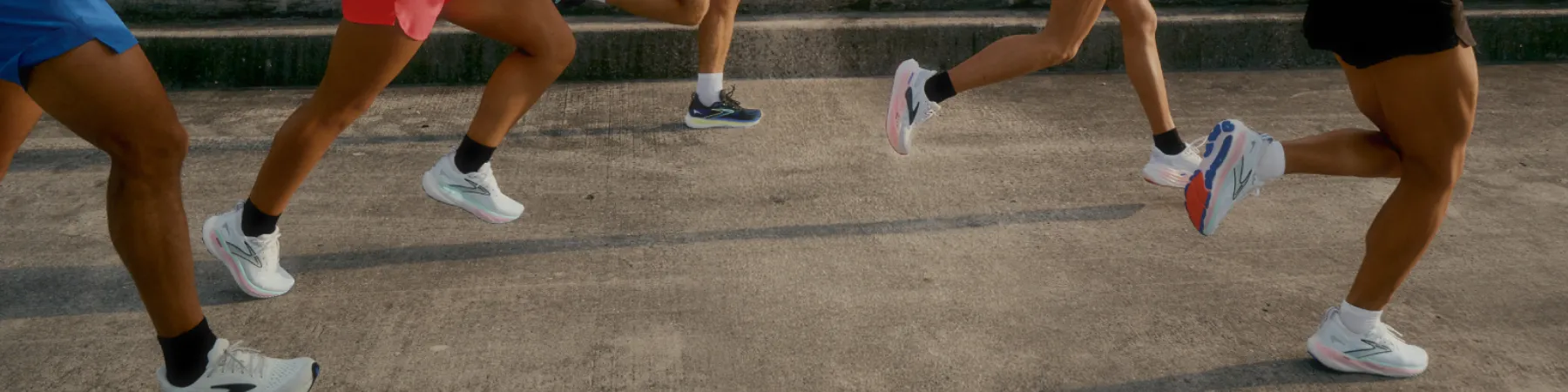
Running shoes are engineered to absorb impact, support natural foot motion, and keep you moving efficiently mile after mile. The right pair reduces fatigue, lowers injury risk, and matches the surface and distance you run most. Choosing among them comes down to your gait (how your foot rolls when it lands), where you run, and how much cushioning you want underfoot.
Neutral Running Shoes Neutral running shoes are designed for runners whose feet roll inward a normal amount on impact, offering balanced cushioning without added support structures. They give the foot freedom to move naturally and suit the majority of runners. If your arch is medium to high and your stride feels even, neutral shoes are usually the right starting point.
Stability Running Shoes Stability running shoes add structured support to help guide the foot for runners who overpronate, meaning their feet roll in too much on landing. Reinforced midsoles and medial posts gently (support on the inside) correct that motion to reduce strain on the knees and ankles. Runners with flat or low arches often find stability shoes more comfortable over longer distances.
Motion Control Running Shoes Motion control running shoes offer the highest level of structure and are built for runners with severe overpronation or very flat feet. They're stiffer and more supportive than stability shoes, holding the foot firmly in place throughout each stride. They're typically recommended for heavier runners or those who need maximum corrective support.
Cushioned & Max-Cushion Running Shoes Cushioned running shoes prioritize soft, plush impact absorption for a smoother ride, with max-cushion models featuring extra-thick midsoles for the most gentle feel underfoot. They're popular for long-distance runs, recovery days, and runners who want to minimize joint impact. The trade-off comes down to weight as they are often heavier and bulkier than more minimalist counterparts.
Lightweight & Racing Shoes Lightweight running shoes and racing flats are stripped down for speed, with minimal cushioning and ultra-low weight to help you run faster. Modern racing shoes often include carbon-fiber plates that provide propulsion with each stride. They're best suited for race day, tempo runs, and runners chasing personal bests. Their tradeoff is often less durability (fewer miles before they need to be replaced).
Trail Running Shoes Trail running shoes are built for off-road terrain, with aggressive lugs (tread on bottom of shoe) for grip, reinforced uppers for protection, and sometimes rock plates to shield your feet from sharp ground debris. They handle mud, roots, rocks, and loose dirt far better than road shoes. If you regularly run on trails or more technical terrain, a dedicated trail shoe makes a real difference.
Road Running Shoes Road running shoes are designed for paved surfaces, with smoother outsoles and cushioning tuned for the repetitive impact of hard surfaces like concrete or asphalt. They're the default choice for most runners logging miles in town, on sidewalks, or on tracks. Their lighter, more flexible build makes them ideal for predictable surfaces.
Minimalist & Barefoot Running Shoes Minimalist and barefoot running shoes have very little cushioning and a near-zero heel-to-toe drop, encouraging a more natural midfoot or forefoot strike. They promote foot strength and a closer connection to the ground, but require a gradual transition to avoid injury. They appeal to runners interested in form-focused training or natural movement.